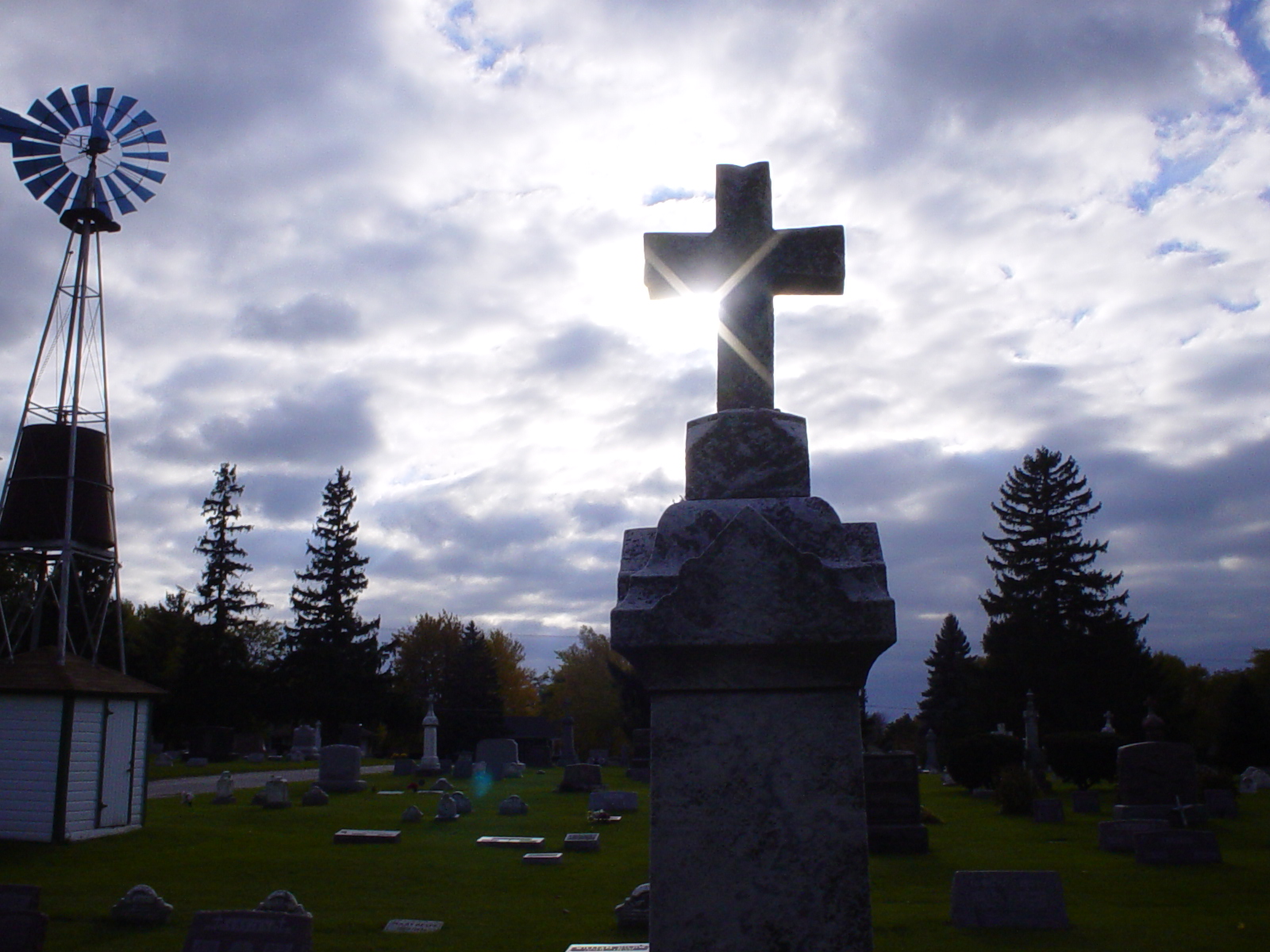
During my genealogy research I’ve visited many cemeteries along the way and have taken pictures of at least one hundred headstones. While I am looking for lost family members or volunteering to do it for someone else, I sometimes take photos of the cemetery itself. I’ve always found cemeteries both fascinating and calming. They’re like a park full of local history and some of them were originally built that way. There is a certain beauty to the melding of the stones and nature, especially if you visit during certain times of the year like fall or spring. Here are ten of the favorite cemetery photos that I have taken over the years.
Category: Cemeteries
One Billion Graves
I ran across a website recently that is a really clever idea. I know I’ve stumbled upon it before, but for some reason I never stayed. Now I’m hooked. BillionGraves.com is a site, similar is some ways to Find-A-Grave. To be honest, while I love Find-A-Grave and I will always use it, its age is showing. The site has not changed since I first found it over 10 years ago. The user interface is lacking, the headstone-adding process is getting clunkier every day, and it’s old and archaic. BillionGraves just feels fresh, new, and powerful. The sites, while having the same goal, work in a very different way.
I know I’ve had a similar idea in the past, though I never did much with it. I did transcribe one cemetery by hand once about 12 years ago, St. Finbar’s Cemetery in Saukville, Wisconsin, which is still online at interment.net. That was a small cemetery and it was a lot of work requiring going to the cemetery, visiting each stone, transcribing the info, writing it down in a notebook, taking it home, typing it into a computer, etc. I used a whole day just on that little cemetery. I love digitizing old records and other family information for people to find online. I had an idea to take pictures of every headstone in a cemetery and make some sort of website, but it still sounded like a lot of work for me, so I never did anything with it. Well, now Billion Graves has done it, and much better than I ever could have on my own.
Let them show you how they take people and technology to make the process extremely powerful:
So, if you have a smart phone of the iPhone or Android variety, you can download the BillionGraves.com app (iTunes link) and then visit your local cemetery and just start taking photos. The app will automatically capture the GPS coordinates on the cemetery and headstone and upload the photo to their servers.
Even if you don’t have a smart phone device, you can help by visiting the website and transcribing headstone photos that others have uploaded. I, myself, have transcribed almost 100 headstone photos already. It’s quick and easy and hopefully it’ll help countless people around the world.
CategoriesCemeteries
Henry & Margaret Stearns
Today I received another great email that two more of my ancestor’s headstones were found and photographed by a friendly Find-A-Grave volunteer. I don’t remember when I requested these, but it’s nice to finally know where they are located. Though, it’s interesting to see that their headstone spells their name Sterns, instead of Stearns. Click the thumbnails for larger versions.
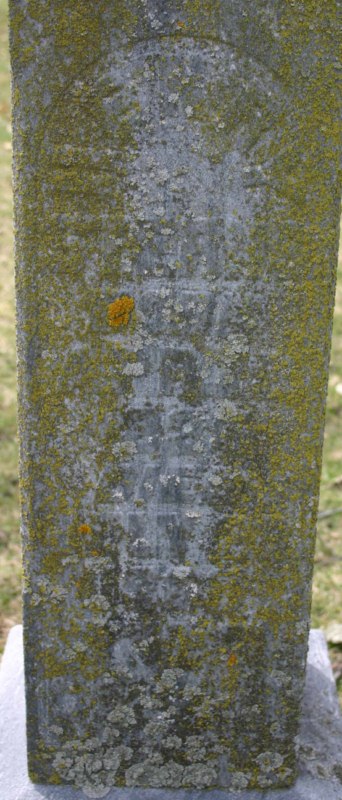
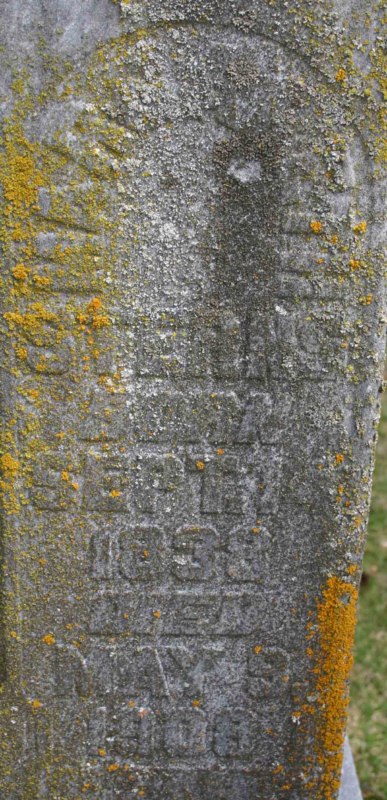
My 3rd-great-grandparents, Henry Stearns (also known as Georg Heinrich Stierns) and his wife Margaret (also known as Katherine Rosina Margaretha Schumacher), immigrated from Württemberg, Germany with their four children and settled in northern Wisconsin. They are both now buried at Oakwood Cemetery in Weyauwega, Waupaca Co., Wisconsin.
Links to their Find-A-Grave entries: Henry Stearns & Margaret Stearns.
Cold Stones
I probably didn’t pick the best day to do some more research at Holy Cross Cemetery in Milwaukee today. A wonderful “spring” day in Wisconsin, a windy 23 degrees with snow flurries. I also should have probably worn more than a sweatshirt, but it wasn’t all that bad. I did have a knit cap on.
Last night I made a list of all of the headstones I wanted to find at the cemetery, including some I already had. I wanted to get better quality photos. Well, the small list turned into two pages of entries, about 55 total. Thanks to the Archdiocese website, I was able to map (the general area) of where the stones were. I hit up the stones I really wanted to find first, the Gwiazdowski, Goralski, and Jacob Zalewski family. Once I found the section and started to walk the graves, I cursed myself for not wearing a larger coat. Though, once I found the collection of stones I forgot about the cold.
All of the stones were in one area in the middle of Block 4B. I caught the “Goralski” name on one of the large stones while walking. The way the graves were set up mostly solidifies the Gwiazdowski/Goralski/Zalewski connection, because Jacob Zalewski, Jr and his wife were on the same stone as the Goralski’s and Gwiazdowski’s. I know it’s not proof, but there are few reasons why else they would be on the same stone.
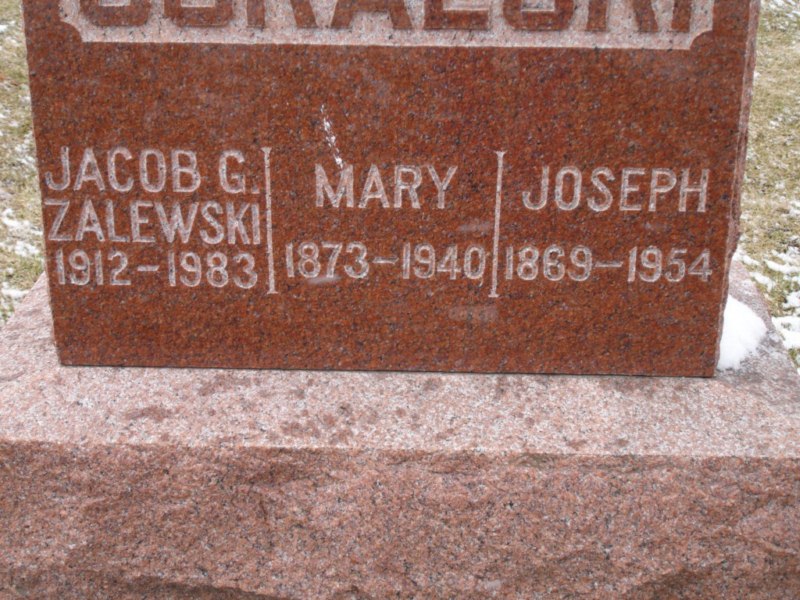
On the other side of this stone are August & Anna GWIAZDOWSKI and Jacob’s wife, Alice. That’s another notch in the connection that Mary is August & Anna’s daughter. Jacob, Sr & Pauline ZALEWSKI, along with their son Edward and his wife Kathryn were on the next headstone to the south.
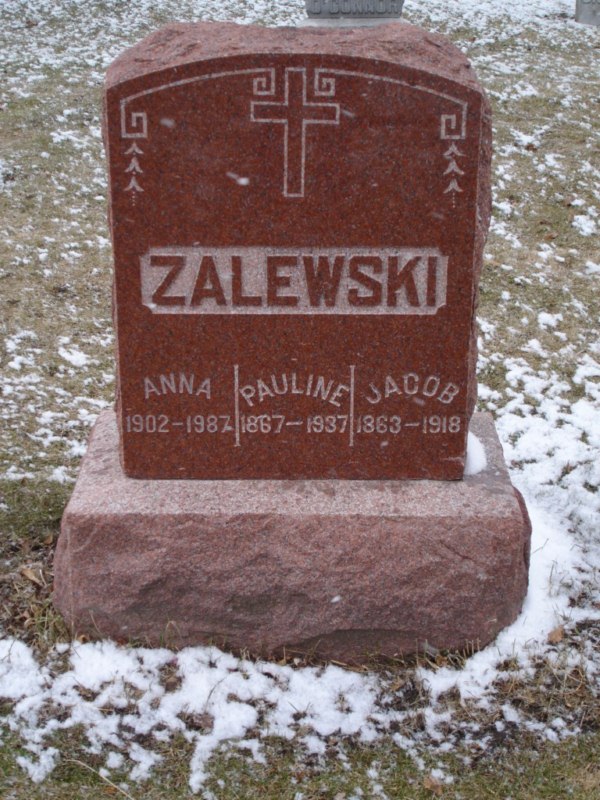
Unfortunately, there wasn’t much but dates on the stones. I was hoping maybe for maiden names or birth places. It’s still more proof and it’s nice to finally visit their final resting place. I didn’t get to my whole list since the other sections were mostly all flat headstones and I didn’t want to have to walk in the snow and cold to try to find them. Even though I had pinpointed it to Section, Lot, and Grave number, it was hard to figure out where the specific Lots were.
I’ll come back later and get those photos once it’s actually spring here. My dad said he would also like to tag along, but he wasn’t feeling well today and it wasn’t a very pleasant day to go anyway.
Tombstone Tuesday: Toney

This is the headstone of my wife’s 5th-great-grandfather on her father’s side, Carey Toney. Carey was born 3 Oct 1763 (or 1757) in Buckingham Co., Virginia to William and Margaret (SUTHERLAND) TONEY. He married Elizabeth DOREN in 1789. Later they traveled to Ohio where they lived out the rest of their lives. Carey died on 6 Sep 1859 at the age of, as the stone says, “about 100 years.” He is buried with his wife at Railsback Cemetery in Union County, Indiana.
Tombstone Tuesday: St. Mary’s
This week brings another random cemetery shot. For every photo of an actual headstone from my family tree, I have dozens of generic cemetery photos.
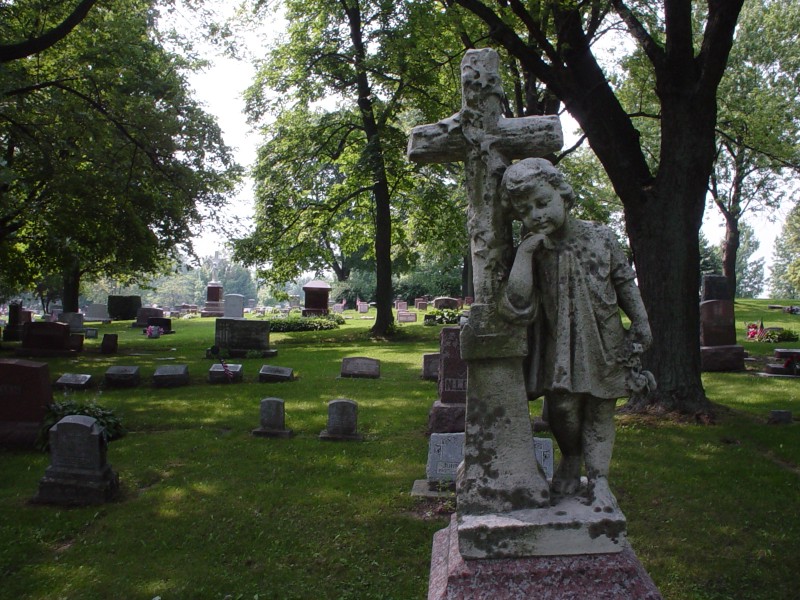
This photo is from St. Mary’s Cemetery in Port Washington, Ozaukee Co., Wisconsin. [Find-a-Grave link] My great-grandparents Leon & Mildren (Van Price) DEBROUX are buried here along with some of their other family. It’s situated in some trees and on a hill facing west. When you come into Port Washington on Interstate 43, you can see the hill in the distance.
Tombstone Tuesday: What’s Next
So, I’m coming to the end of my family tree tombstone photos. So, instead of trying to find a new one of those to post, I thought I’d post some general cemetery photos. While visiting the cemeteries to find the stones of my ancestors I’d sometimes just take random photos. Some of them turned out pretty good. Cemeteries photos can come out beautiful or sometimes even creepy, depending on the season as seen below.
This photo was taken at St. Francis Borgia Cemetery in Cedarburg, Ozaukee Co., Wisconsin. This is the cemetery my grandfather is buried at. I had stopped there in early spring before winter had loosened it’s grip on the area.
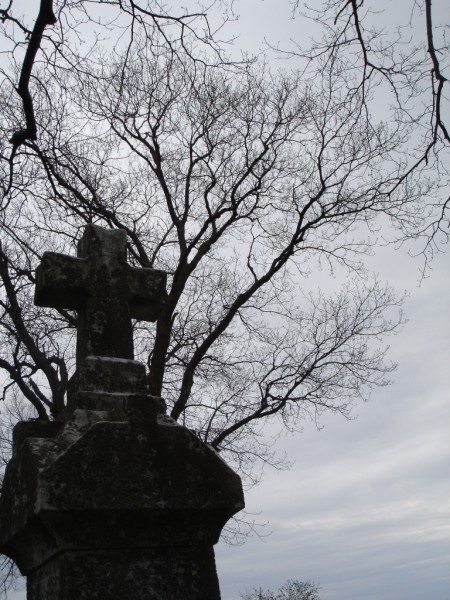
There are a few Flickr groups dedicated to cemetery photos that are interesting to browse if you’re into that sort of thing. I have submitted a few of mine to some of them. A few of them are: Graves, Tombs, and Cemeteries, Graveyards, and Autumn in the Graveyard.
Happy Memorial Day
Happy Memorial Day, everyone! I’d like to thank all of my military ancestors and all of your military ancestors, too.
- Johann W G LAST – Civil War- My 3rd-great-grandfather, server with Company K, 50th Infantry Regiment Wisconsin – 29 Mar 1865 to 14 Jun 1866
- LeRoy THIELKE – World War II – My grandfather, served in World War II. It’s not a subject that has ever been talked about, but I commend him for fighting for our country.
- Joseph Frank ZALEWSKI – World War I – My great-grandfather, started in the 86th Division, Company B, 331st Machine Gun Battalion. Later served in the US Army Infantry and fought with the Allied Expeditionary Forces in France during several major battles.
- Richard Joseph ZALEWSKI – My late grandfather, served in the US Navy during World War II.
Continue for some select photos
Tombstone Tuesday: John Laurent
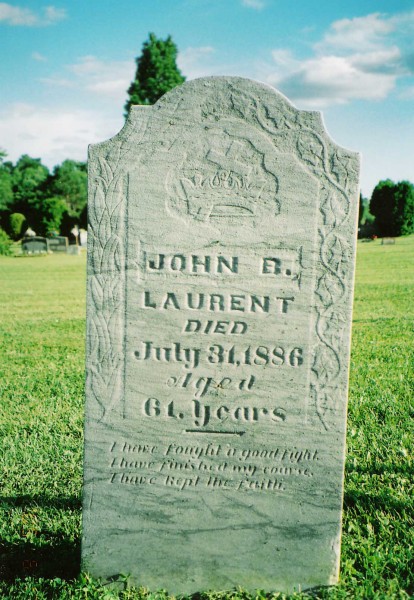
I’m starting to run out of tombstone photos. I’ll need to start posting those from my wife’s family tree pretty soon. This one is from my family tree and is that of Jean-Baptiste (John) LAURENT, 3rd-great-grandfather. He was born about 1825 is Belgium, according to census records. He married my 3rd-great-grandmother, Olivie ST. LOUIS, on 7 Sep 1857 in Little Chute, Outagamie Co., Wisconsin. Together they had 9 children including my great-great-grandmother, Mary Philomene LAURENT. He passed away on 31 Jul 1886 in Phlox, Langlade Co., Wisconsin and is buried at St. Joseph’s Catholic Cemetery in Norwood, Langlade Co., Wisconsin. This photo was graciously taken for me by a volunteer in the area.
Tombstone Tuesday: As Irish As I Could Find
Well, it’s St. Patrick’s Day and I am without a true Irish headstone. I have a lot of Irish ancestors, but not a lot of headstone photos for them. Most of them passed away in mysterious, far away lands (like Canada.)
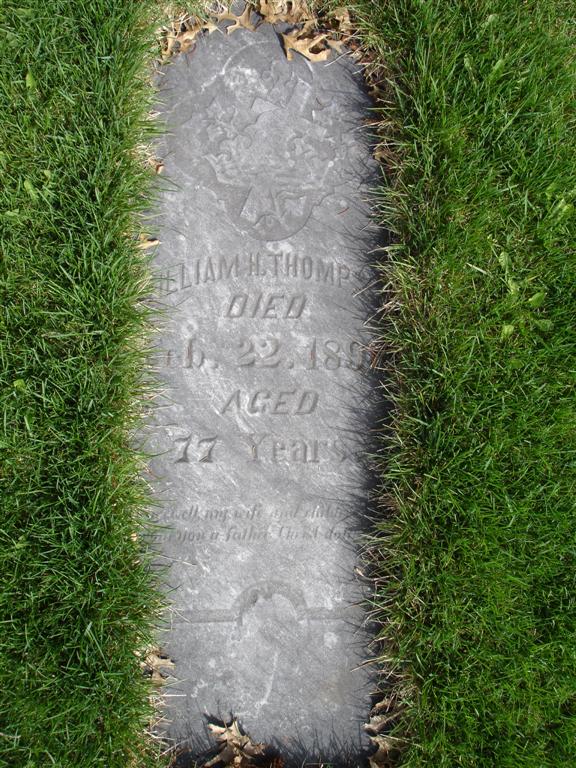
This headstone of my 4th-great-grandfather will have to do for today. From my research William Henry THOMPSON was either born in 1810, 1813 or 1816 and he was either born at Scotland, England or Ireland. I’ve found sources mentioning all three of these. At least it puts him in the United Kingdom, so it counts.
William is one of my brick-wall ancestors. I can find no more information on him or his family. He is also one of the only ancestors that I need to research that has a very common name. I’m so used to looking for surnames like ZALEWSKI or SZULTA, which require a different sort of mindset. I’m not used to getting back 12,000 results when searching. The plus side is that a lot of people are probably doing THOMPSON research, so maybe I’ll come across something.
It’s listed that William married Claude-Françoise QUINET in 1839 in Syracuse, Onondaga Co., New York. I haven’t been able to find any info from here either including using the Onondaga Co. GenWeb site. William and Frances moved to Wrightstown, Brown Co., Wisconsin where they lived out the rest of their lives. They were both buried at St. Paul’s Cemetery in Wrightstown. I did a Tombstone Tuesday on Frances a few weeks back.
Found and Not Found
Since the weather started to get nicer here and the snow is mostly gone, I thought I’d tackle some research involving the cemeteries again. Two of my ancestors are known to have lived and died in the Port Washington, Ozaukee Co., Wisconsin area, but I had yet to pinpoint their final resting places.
I did some research and found that on the death certificate of my 3rd-great-grandmother, Charlotte (STRASSMAN) LAST, she is listed as having been buried at Union Cemetery in Port Washington. This is also where her son (my great-great-grandfather) and his wife are buried. I know I’ve looked through most of the headstones there in the past while looking for other LAST relatives, but I don’t remember seeing it. She did die in 1900, which means the stone may be unreadable/broken/missing/etc. One would also assume that her husband, Johann W G LAST, would also be buried there along with her (or at least nearby.) He did die almost 30 years before she did (more on that later.)
Today, since it was in the 50s outside, I decided to make another pass through the cemetery. I was planning on going anyway to get a requested volunteer photo via Find-a-Grave. I first walked through the stones in the older area figuring it should be in there, but I did not find anything (besides some very hard-to-read stones.) I then hit the next section, which does have some older stones on the edges. I also kept an eye out for military flags, stars, etc, especially the Civil War-related GAR signs. I then found a very worn headstone with the name “JHO. LAST”. I couldn’t make out the dates written on it until I realized it actually said “Co. K, 50th Wis Inf“ which was his exact Civil War information. Unfortunately, it had no vital dates listed, which I don’t have either. All I had for his death date was “Between 1870-1880” since he was listed in 1870 and then his wife was listed as “widow” in 1880. His birth date was based on the census records.
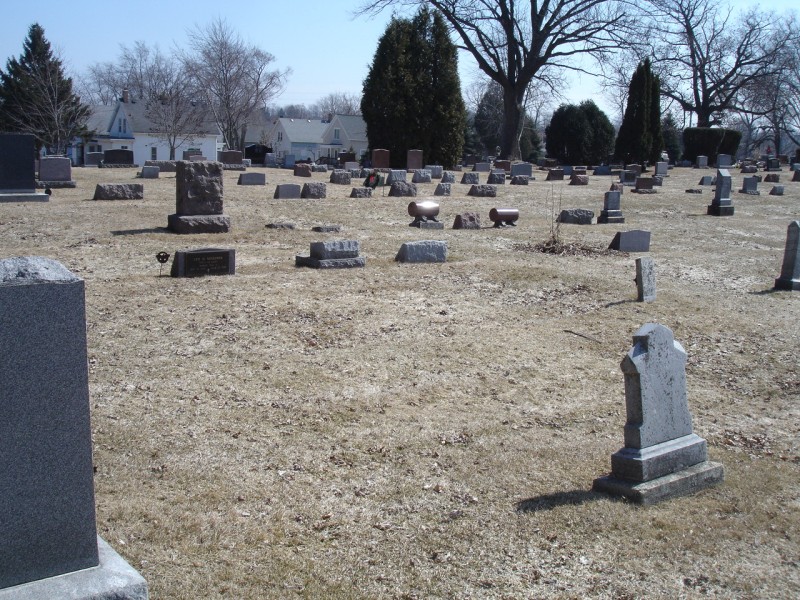
There was also no Charlotte LAST stone nearby, or any LAST’s for that matter. I checked the rest of the cemetery and still no Charlotte. Since her death certificate notes that she is here (and most of the family is here) I can only assume her stone is either missing, unreadable or broken. There was a large gap (note in the photo) next to John’s headstone, which seemed out of place, so it is possible that she is there. There is also a stone that just says “Mother” on it near her son, Charles LAST. but he died long after Charlotte. Charles’ wife Augusta is also buried there and the “Mother” stone could be talking about her.

But, that wasn’t the end of the good news for John LAST. It turns out I had his death date right under my nose the whole time. I found a listing of good Civil War indexes on Ancestry and decided to just search them all again. Most of the searches turned up documents I already had. Then I searched the “Headstones Provided for Deceased Union Civil War Veterans, 1879-1903” database. John was listed as recieving a headstone and on the index card it lists his death date as “14 Aug 1872.” That’ll teach me to make sure I check every database next time.
I emailed the Port Washington Historical Society to see if Union Cemetery has burial index to see if maybe they have a specific plot where Charlotte may be buried. We’ll see how that works out.